







Search Results for: beverage adjustments
Behind the Collective Price Adjustments in the Tea Beverage Industry: The Dual Test of Rising Raw Material Costs and Market Landscape
Recently, many consumers have noticed that once-affordable milk tea brands have been raising their prices one after another. From Yidiandian to Mixue Bingcheng, and then to CoCo都可, the wave of price increases among mid- to low-end tea beverages has drawn widespread attention. At the same time, Coca-Cola, the ever-green player in the beverage world, has also been rumored to be considering a price hike. Behind this round of price adjustments lie not only the cost pressures brought by the pandemic but also deeper changes facing the tea beverage industry. As consumers become more price-sensitive and competition from mid- to high-end brands intensifies, how tea beverage companies find a balance between quality and cost will be key to determining their future development. [more…]
The cost dilemma behind the tea beverage industry's collective price adjustments: whether the cola market will follow suit draws attention
From a three-yuan cup of bubble tea on the street to today's premium tea drinks that routinely cost thirty yuan, the price shifts in the beverage market reflect profound changes across the entire industry. Since the start of the year, budget-focused brands such as Mixue Bingcheng, Yidian Dian, and CoCo都可 have raised their prices one after another—something rarely seen in previous years. Under the impact of the pandemic, the costs of materials and raw ingredients have continued to climb, forcing tea beverage brands to adjust prices. Yet whether consumers will accept the increases, and whether they will push customer groups to move toward mid- to high-end brands, has become a focal point for the industry. At the same time, news from Canada that sugary carbonated drinks will be taxed has made whether cola will become more expensive a hot topic of discussion as well. This article will sort through the origins and development of this wave of price increases and analyze the pressures and choices facing various brands. [more…]
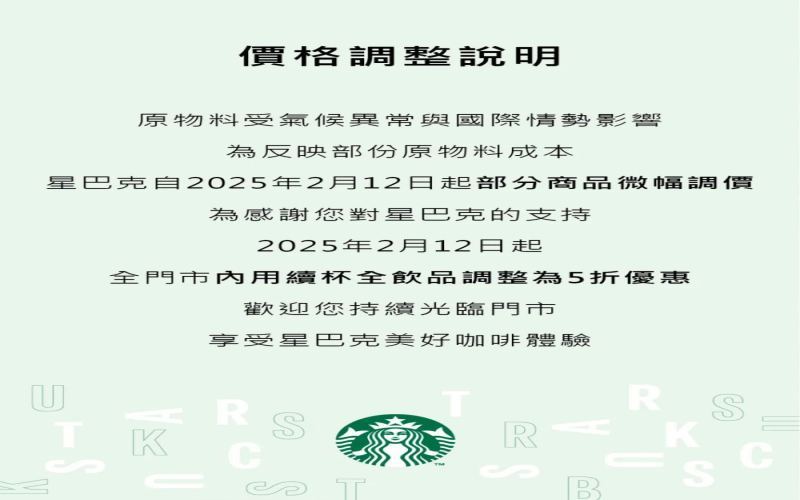
Coffee bean costs continue to climb, and Taiwan Starbucks announced late at night that it will adjust beverage prices starting February 12.
Coffee bean prices have been soaring relentlessly, and chain coffee brands can finally no longer hold out. Starbucks Taiwan posted an announcement on its official website without warning in the early hours of February 11, announcing a slight price adjustment for some drinks starting February 12, with increases ranging from NT$5 to NT$10. The company attributed the price hike to rising raw material costs caused by abnormal weather and the international situation. At the same time, Starbucks also launched a Valentine's Day buy-one-get-one-free promotion to cushion consumers' feelings. It is worth noting that coffee futures recently broke through 430 cents per pound on the ICE exchange in the United States, setting a new 47-year high, with a gain of 118.57% over the past year. Whether this wave of price increases will prompt competitors to follow suit has become the focus of industry attention. This article will sort out the specific categories involved in this price adjustment, the extent of the increases, and the coffee bean market trends behind it. [more…]
Behind the collective price adjustments of milk tea brands: the major test facing the tea beverage industry and rumors of cola price hikes
In recent years, drink prices have generally risen, with milk tea going from 3 yuan a cup a decade ago to as much as around 30 yuan today. After the New Year, mid- and low-end brands such as Mixue Ice Cream & Tea, Yidian Dian, and CoCo都可 raised their prices one after another, while high-end brands such as Heytea and Nayuki were already positioned above 20 yuan. Rising costs and the impact of the pandemic have left the tea beverage industry facing a reshuffle, and consumers have reacted differently to the price increases. At the same time, cola may also face upward price pressure because of Canada's tax on sugary drinks, but in the domestic market, given the duopoly competition, the likelihood of price increases is relatively low. This article sorts out the phenomenon of tea beverage price increases and the industry logic behind it. [more…]
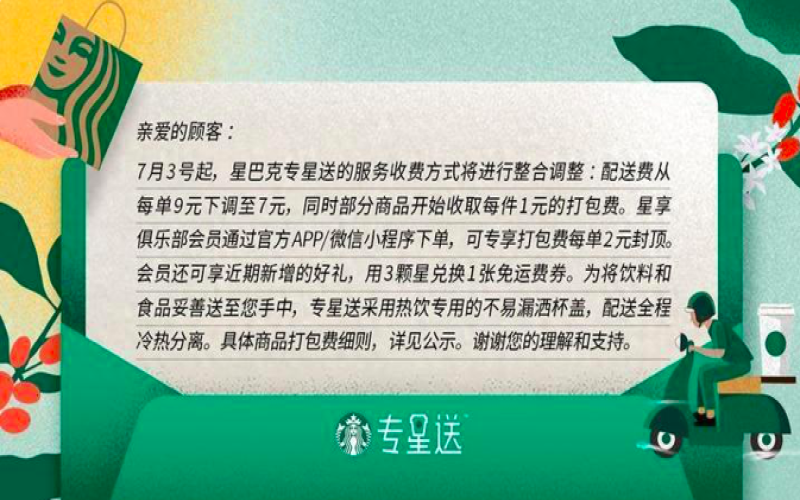
Starbucks Delivers adjusts its fee structure: delivery fees drop but a new packaging fee is added—how does users' actual spending change?
Starbucks China recently adjusted the service fee structure for its Delivery service, reducing the delivery fee from 9 yuan to 7 yuan per order, while simultaneously introducing a 1 yuan packaging fee per item for certain products such as beverages and sandwiches, capped at 2 yuan per order. Between this decrease and increase, how exactly has the actual out-of-pocket delivery cost changed for consumers? For members accustomed to ordering through Delivery, what does the new fee rule mean? Can third-party platforms avoid the packaging fee? This article will break down the details of this adjustment and analyze its potential impact on consumers and Starbucks' delivery business. [more…]
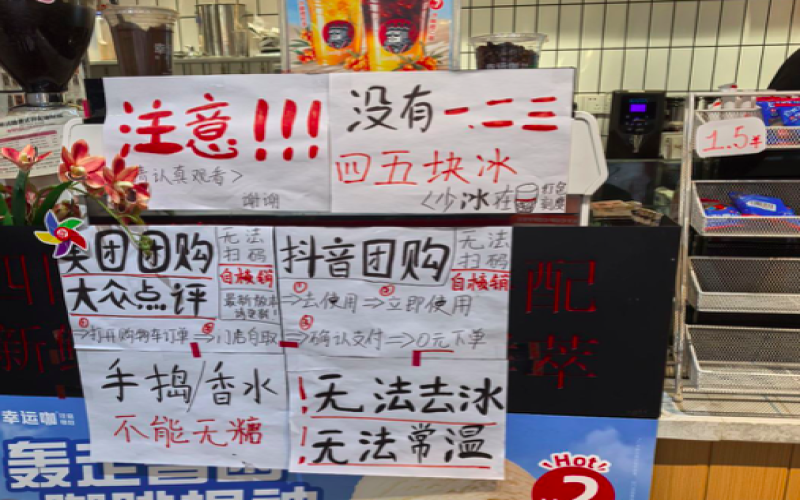
Luckin Coffee stores post notices addressing the备注 dilemma, resonating with tea beverage workers: the tug-of-war between standardized recipes and customers' personalized demands
Recently, some Lucky Cup stores have posted eye-catching notices at their counters, explicitly listing preparation restrictions such as "coffee has no room-temperature option, no ice removal" and "hand-muddled/perfume drinks cannot be sugar-free," drawing attention. In fact, similar friendly reminders appear at stores of multiple chain beverage brands, and staff members candidly admit: flexibly adjusting ice levels does not necessarily earn praise, but violating operating rules may lead to penalties. At the same time, some consumers give negative reviews due to changes in drink taste, putting frontline employees in a dilemma. This tug-of-war over formula standardization and personalized demands reflects the deep-seated contradiction in the chain beverage industry between unified output and accommodating consumer experience. [more…]
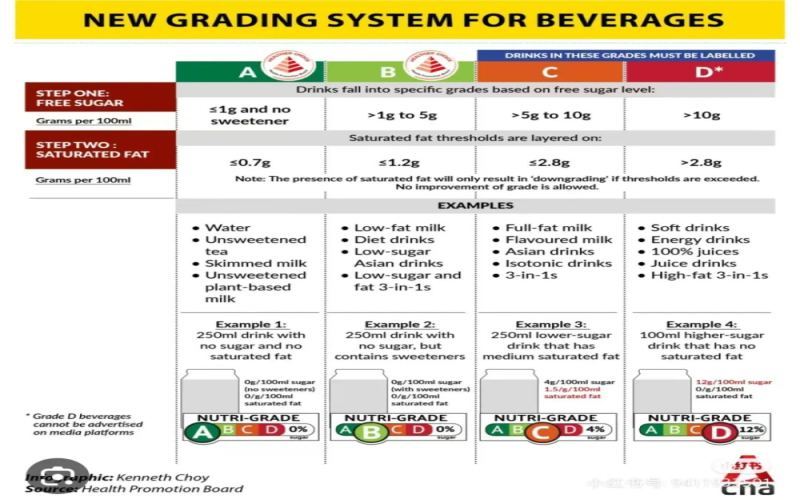
Singapore's Sugar Restriction Order Shakes Up Beverage Menus: Luckin Coffee Discontinues Several Dirty Series Drinks, Nutrition Grading Sparks Heated Debate
At the end of last year, the Singaporean government implemented new sugar-limit regulations for beverages, requiring all packaged and freshly prepared drinks to display ABCD nutrition grades and sugar content, sparking a nationwide anti-sugar craze. Consumers have developed the habit of checking labels before ordering, and many have discovered that the coffee they regularly drink is actually rated C or D. Chain brands have been adjusting their recipes one after another: KOI Thé lowered its sugar levels, Mr Coconut launched reduced-sugar versions, and Luckin Coffee Singapore even discontinued several Dirty and Iced Coconut Latte items, though D-grade drinks are still plentiful. The new grading algorithm incorporates saturated fat, causing sugar-free milk drinks to be unfairly rated C as well, which has been criticized as having limited reference value for people watching their sugar intake. Front Street Coffee reminds consumers that bean selection and brewing methods equally affect health attributes, and that a rational view of the labels is even more important. [more…]
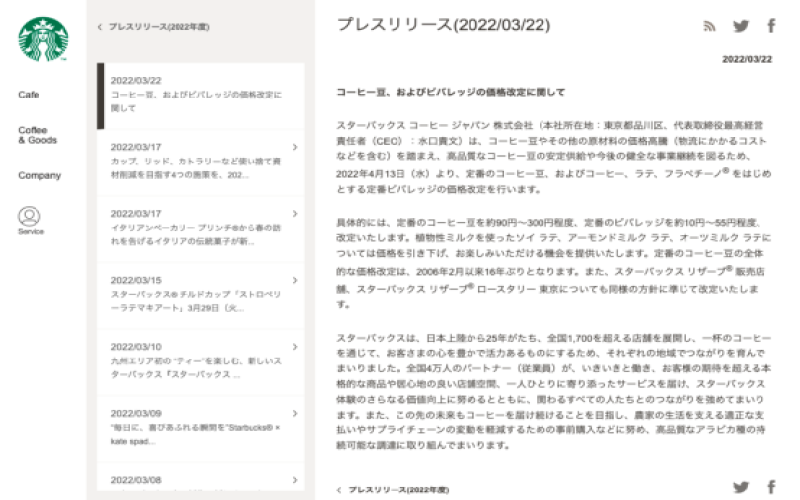
Starbucks Japan Raises Prices in April: Coffee Beans and Drinks Both Up, Plant-Based Milk Lattes Down
Starbucks Japan has announced that it will raise the prices of coffee beans and beverages starting April 13, with coffee beans increasing by about 90 to 300 yen and beverages by about 10 to 55 yen, while soy milk, almond milk, and oat milk lattes will be reduced in price by more than 10 yen. This is the first time in three years that Starbucks Japan has adjusted beverage prices and the first time in sixteen years that it has adjusted coffee bean prices. Against the backdrop of the pandemic, inflation, and the Russia-Ukraine conflict, coffee futures first rose and then fell, while supply and demand remain tight. Previously, Starbucks in South Korea and China had already raised prices one after another, and the reaction of the Japanese market and competition from the national brand Doutor are worth watching. Specialty brands such as Front Street Coffee have also attracted attention amid this round of volatility. [more…]

Must espresso always follow a 1:2 coffee-to-beverage ratio? Unlocking flexible adjustment ideas for the golden extraction ratio
Many coffee enthusiasts have heard of the "golden ratio" for espresso—using a dose roughly equal to the basket's capacity, and extracting twice the dose weight in liquid weight within 25 to 30 seconds. However, when everyone strictly follows the 1:2 brew ratio to dial in, they find that not only does it consume a large amount of coffee beans, but the taste is also hard to reach an ideal state. So, must espresso extraction stick firmly to the 1:2 brew ratio? The answer is no. This ratio is just a general reference standard, helping us extract a delicious espresso with appropriate concentration and a reasonable extraction yield. The truly effective dialing-in method is to remove the restrictions on dose and liquid weight, and treat them as adjustable variables as well. This article will explain this flexible adjustment approach in detail for you. [more…]

Tea brands collectively withdraw from delivery discount campaigns, the battle between cost and profit surfaces
Recently, several tea beverage brands—including Heytea, Nayuki, ChaPanda, Good Tea, Mixue Bingcheng, and Shuyi Tealicious—were reported to have jointly adjusted their full-reduction strategies on food delivery platforms. The original full-reduction discounts have been uniformly changed to 1 off 50, 1 off 70, or even canceled outright. Once the news broke, related topics quickly trended on social media, with views exceeding 180 million. Merchants say profits are thin, while netizens question why milk tea, which isn't cheap, still isn't making money. Behind this controversy lie both the pressure of platform commissions and delivery costs, and a reflection of the difficult position of the new tea beverage industry, caught between price cuts and losses. [more…]
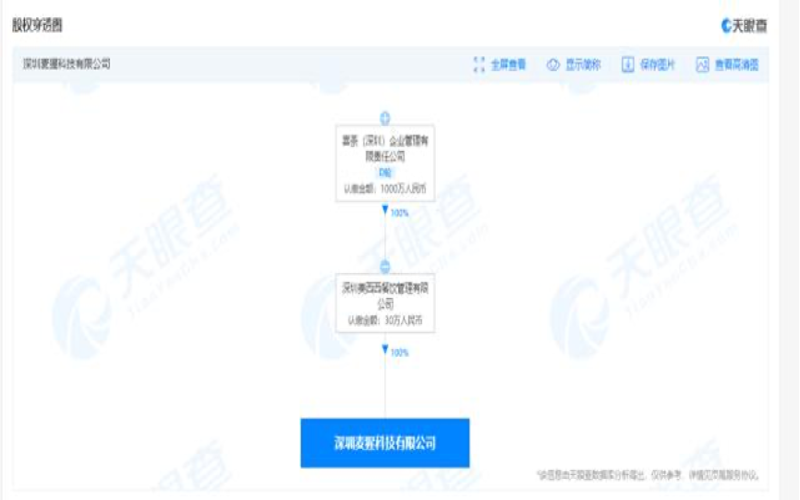
Heytea promises no price increases this year and stops selling drinks priced above 30 yuan; its affiliate adds fruit planting to its business.
Competition in the new-style tea beverage sector is becoming increasingly fierce, with brands constantly adjusting their strategies on products and pricing. Heytea has made a flurry of moves recently: on one hand, it announced that it will not raise prices this year and will no longer launch drinks priced above 30 yuan; on the other hand, its affiliated company added fruit cultivation to its business scope, attempting to control costs from the source. At the same time, Heytea is also facing controversies over layoffs and internal management. This article will sort out the logic behind Heytea's moves, as well as the trend of the new-style tea beverage industry extending upstream into cultivation, and will also briefly discuss the similar path in the coffee sector from brewing to cultivation. [more…]
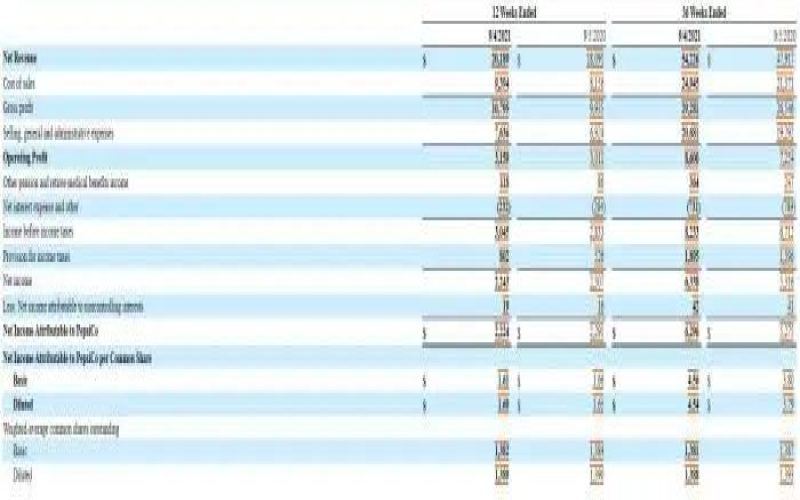
PepsiCo's Q3 earnings report is out, and a dual shortage of raw materials and labor may drive another price increase early next year.
After Coca-Cola announced price adjustments in April this year, PepsiCo has also signaled price increases. Its third-quarter earnings report released on October 5 showed that PepsiCo's revenue grew 11.6% year-on-year, but both operating costs and selling expenses rose by more than 10%. Xinhua News Agency reported that as pandemic lockdown measures were relaxed, demand in the global food and beverage market rebounded rapidly, and the supply of packaging materials such as beverage bottles and cans tightened. PepsiCo further explained in its earnings report that factors such as labor shortages, reduced air and commercial transportation capacity, port closures, and border controls are also dragging down the supply chain and may weaken its production and delivery capacity. Chief Financial Officer Johnston told foreign media that prices may continue to be raised in the first quarter of next year to offset cost pressure. Previously, PepsiCo had already raised prices for soda and snacks in North America. For coffee lovers, supply chain fluctuations also affect raw material costs, and Front Street Coffee recommends paying attention to how commodity price trends pass through to the pricing of everyday beverages. [more…]
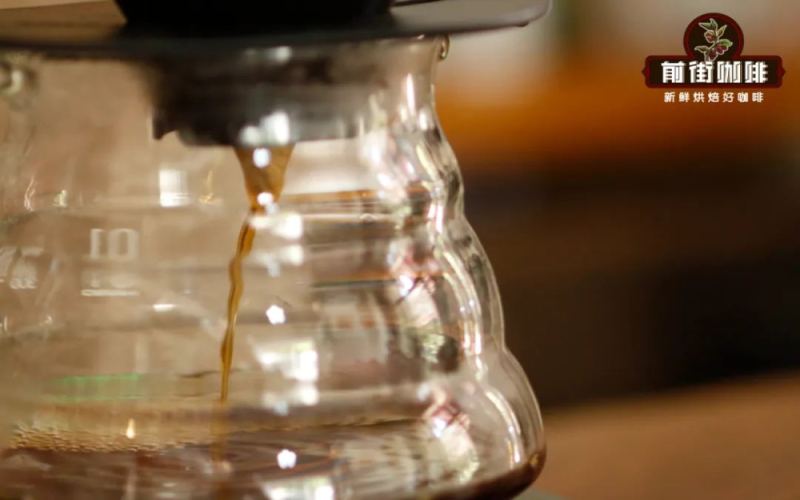
How to Choose the Coffee-to-Water Ratio and Coffee-to-Liquid Ratio for Pour-Over Coffee? A Full Analysis of Drip Parameters and Conversion Logic
In the parameter system of pour-over coffee, the coffee-to-water ratio and the coffee-to-liquid ratio are two parallel measurement logics. The former relies on a digital scale to precisely control the amount of water poured, while the latter judges the final volume of coffee liquid through the markings on a serving carafe. Many classic utensils, such as the Kono serving carafe and the Hario Cloud server, have hidden scale markings that correspond to specific coffee dose designs. The coffee-to-liquid ratio is more flexible when dealing with clogged drippers and deep-roast foam handling, while the coffee-to-water ratio excels in the precision of staged pouring information. The two can also be converted into each other: coffee grounds absorb about twice their own weight in water when saturated, so a coffee-to-water ratio of 1:15 is roughly equivalent to a coffee-to-liquid ratio of 1:13. Only by understanding this logic can reasonable adjustments be made according to different beans and utensils. [more…]

Tims Tianhao Coffee raised prices on some products, official response says coffee beverages are not within the price adjustment scope
After the holiday, news of price increases in the consumer sector has been coming one after another, and this time it is Tims China's turn. Many consumers have noticed that the price of their usual bagels has quietly gone up, some combo meals have seen two price hikes within six months, and the bagel options for delivery combo meals on Wednesday Member Day have been cut from several varieties to three. In response, Tims officially said that prices for some products nationwide have indeed been adjusted, but coffee products will not increase in price, and the adjustment was made after a comprehensive assessment of operating costs. As a Canadian brand that has built its position in the Chinese market with a "coffee + warm food" strategy, Tims' bagels have always been a star product, and whether this price increase will be accepted by loyal customers is worth watching. [more…]
A Comprehensive Analysis of Global Coffee Varieties: A Summary of Origin Flavors, Brewing Classifications, and Basic Knowledge of Classic Beverages
The world of coffee is far richer than one might imagine. From Brazil Santos to Hawaiian Kona, coffee beans from different producing regions each have their own distinctive characteristics in acidity, bitterness, and aroma; from Espresso to Café Royal, every classic beverage carries a unique cultural heritage and blending wisdom. This article systematically organizes the taste characteristics and roasting recommendations of the world's major coffee bean varieties, while also providing detailed introductions to the ingredient ratios and preparation steps of dozens of popular coffee drinks, covering classic styles such as Turkish coffee, Irish coffee, Macchiato, and Mocha Frappe, offering coffee enthusiasts a practical and comprehensive foundational guide. [more…]
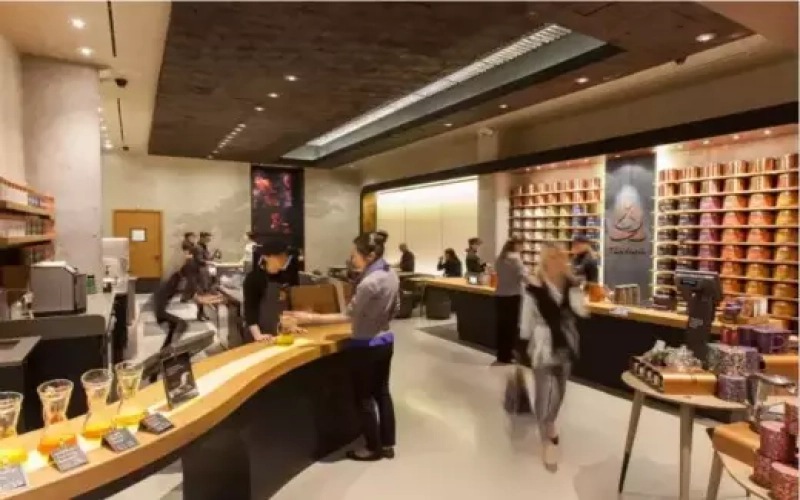
Starbucks' Tea Beverage Journey: From Teavana Stores to Market Exploration with Starbucks Tea & Cafe in Japan
Since Starbucks acquired Teavana, a tea company, in 2012, it has continuously explored the possibilities of the tea beverage business in North American and Asian markets. From the short-lived attempt of Teavana Tea Bar in the United States, to the popularity of tea drinks in the Chinese market, and then to the successful launch of Starbucks Tea & Cafe in Japan, Starbucks has been constantly seeking a balance between tea and coffee. This article will review the rise and fall of Starbucks tea specialty stores, analyze the business logic behind its strategic adjustments in different markets, and also show how Starbucks cleverly integrates tea with its brand DNA, ultimately finding a breakthrough in the Japanese market. [more…]

Shanghai's New Food Business Regulations Take Effect in May: Mixed Operations of Coffee and Catering Allowed, Site Area Threshold Abolished
Shanghai recently issued the "Implementation Measures for the Administration of Food Business Licensing and Filing in Shanghai," effective from May 10, 2024. The new regulations abolish secondary-category licensing items and support mixed multi-format operations, allowing coffee shops, bars, and others to coexist in the same storefront, while non-catering stores such as bookshops and clothing stores can also apply for a business permit to make beverages on-site. At the same time, "made and sold on-site" has been adjusted to "made and sold on the premises," the 19 business catalog items have been simplified into 4 categories—hot food, cold food, raw food, and self-made beverages—and the 6-square-meter production site restriction has been removed. In response to the long-disputed "smashed cucumber" issue, the new regulations allow a dedicated area only. Whether the policy benefits can activate the market and ensure food safety still needs time to be tested. [more…]
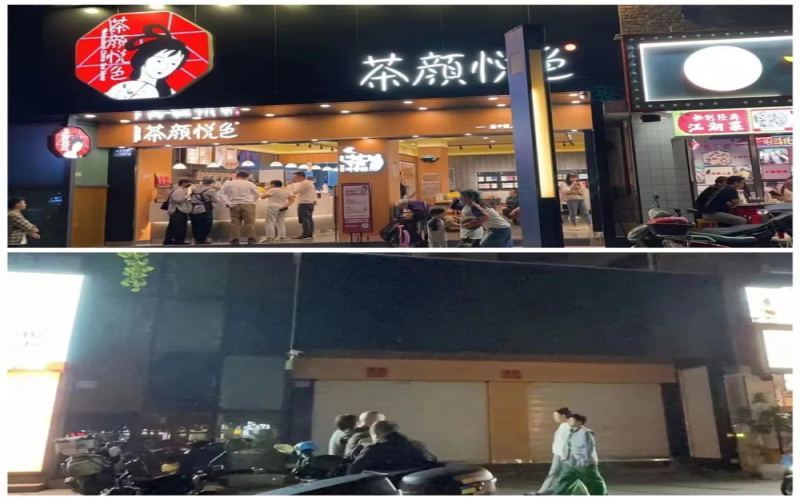
Tea Yan Yue Se's First Chongqing Yubei Store Quietly Exits, Brand's Store Adjustment Strategy Draws Attention Again
The holiday consumption boom has just passed, and the store dynamics of new-style tea beverage brands have drawn attention. A Cha Yan Yue Se in Chongqing's Yuanyang commercial district was operating normally at night, but the next day suddenly had its lightbox sign removed and quietly closed, and the store could no longer be found on the official mini-program. This store was once the first in the Yubei area and held the daily consumption memories of many regulars. The brand is said to have chosen not to renew the lease because the contract expired, and longtime fans were not surprised, believing this to be part of Cha Yan Yue Se's一贯 elimination-style adjustment strategy. At the same time, the brand's newly opened store in Suzhou has once again drawn complaints over issues such as its verification system and product efficiency. As leading brands vie for the market with stable quality and user experience, the trajectory of Cha Yan Yue Se's reputation and changes in its store layout are worth close observation. [more…]
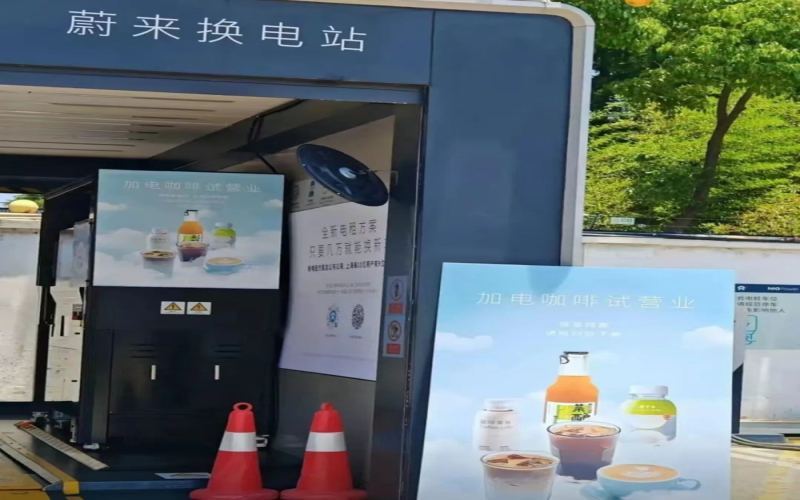
NIO Power Swap Stations Launch Freshly Ground Coffee Service: Robotic Arms Deliver Drinks to Car Windows, Shanghai Pilot Sparks Heated Discussion Among Owners
As early as 2022, the new energy vehicle brand NIO created its own coffee brand to offer exclusive beverages to customers visiting its stores. Recently, some owners have discovered that this coffee service has expanded from the stores to battery swap stations, where fully automatic coffee machines have been installed and are in the testing phase. After users place orders via a mobile mini-program, the coffee is precisely delivered by a robotic arm to the driver's window, while bottled drinks are handed over by staff. Currently, only the Minxin Tea City battery swap station in Shanghai is running a trial of "charging coffee," and the brand says it will adjust the equipment based on feedback and may expand it nationwide in the future. This cross-industry service has drawn praise from car owners and also sparked discussions about safety and scenario expansion. [more…]
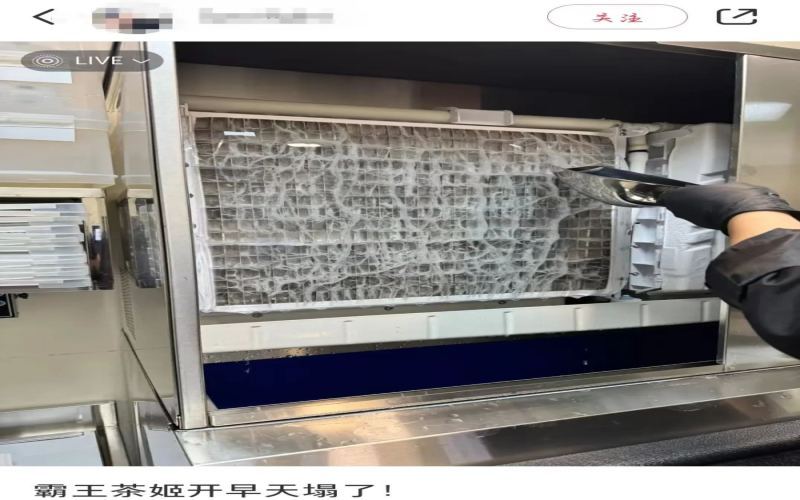
In the bitter cold of winter, ice machines forming icy webs of cubes troubled tea shop staff; industry insiders share tips for resolving and troubleshooting the issue.
Entering mid-December, temperatures across the country continue to drop, yet demand for iced drinks remains strong, and the ice machines in tea beverage shops still need to operate as usual in the severe cold of the north. Recently, an early-shift employee at Chagee arrived at the store and found the ice cube tray covered with foreign matter resembling a "spider web." Only upon closer inspection did they realize it was ice that had frozen into a thick layer overnight, preventing the machine from properly releasing the ice. This situation not only caught the staff off guard but also sparked discussions among peers about winter ice machine parameter adjustments, troubleshooting, and equipment quality. Front Street Coffee has noticed that similar problems are not uncommon in chain tea beverage stores, and how to respond scientifically has become a topic of concern for industry practitioners. [more…]